Power strips protect the lamp, not the furnace.
The expensive electronics in a modern house are the ones hardwired to it: the HVAC control board, the range, the well pump, the EV charger. None of those are behind a power strip.
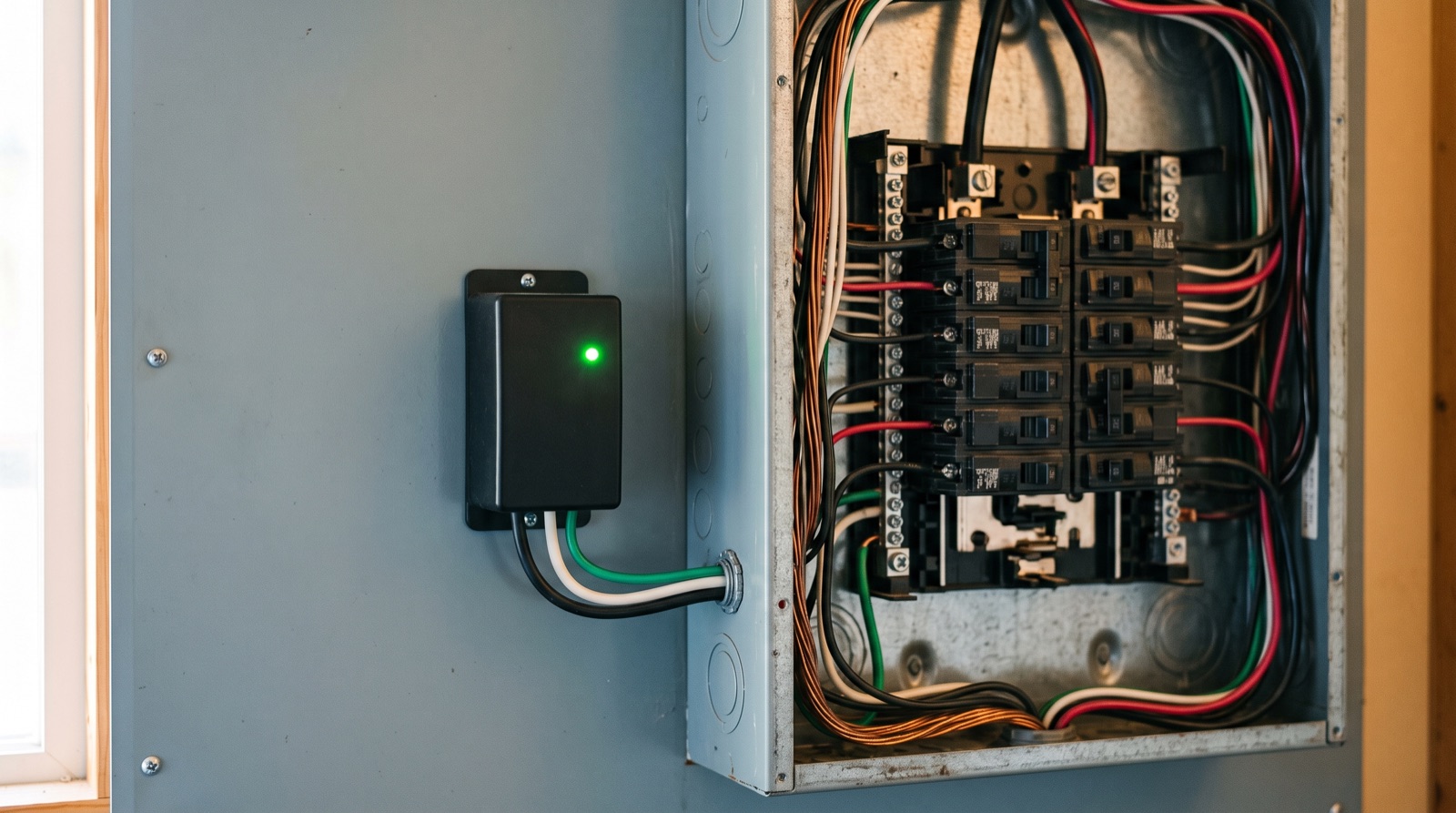
Whole-Home Surge Protection
A whole-home surge protective device at the panel clamps the large transients that power strips cannot — the ones that arrive from the utility side and take out HVAC boards, appliances and everything on a network.
What this job typically includes
- Type 2 surge protective device installed at the service panel
- Sizing and coordination with existing breakers and grounding
- Optional Type 3 point-of-use protection for sensitive equipment
- Verification of the grounding electrode system — protection depends on it
- Status indicator explained so you know when the device has spent itself
- Permit where the jurisdiction requires it
From your request to a finished job.
-
01
Tell us what is going on
Call, or spend two minutes on the quote form. We ask what the problem is, what kind of property, and where you are — enough to pass it to the right contractors and no more.
-
02
We pass it to local electricians
Your request goes to independent electrical contractors who work in your area and do that type of work. A panel upgrade and a PLC fault are not the same trade, so the kind of job decides who sees it.
-
03
Contractors get in touch
Contractors who want the job contact you directly to talk it through and give you a price. Compare them, ask questions, and choose who you want — or nobody.
-
04
You decide and hire
Your agreement for the work is with the contractor you choose, not with us. Before you agree, get the quote in writing, check their licence and insurance with your state, and ask whether a permit is needed.
Surge Protection — what people ask.
Does whole-home surge protection replace power strips?
No — they are layers. The panel device handles the large events arriving on the service. Point-of-use strips clamp the smaller residual and the transients generated inside the house. Best practice is both.
How long does an SPD last?
It has a finite absorption capacity and spends it over time. Most have an indicator light or an audible alert. After a major event, it should be checked and often replaced — a spent device looks identical to a working one.
Will it stop a direct lightning strike?
No, and no honest contractor will say otherwise. A direct strike is far outside what any SPD is rated to absorb. What an SPD handles is the far more common case: the induced surge and the utility-side transient.
Get a quote for surge protection.
Two minutes and no obligation.
Rather write to us? support@bestusaelectricians.com