The outage stops mattering.
A standby unit senses the loss of utility power, starts, and transfers the house over automatically — usually inside 30 seconds, whether you are home or not.
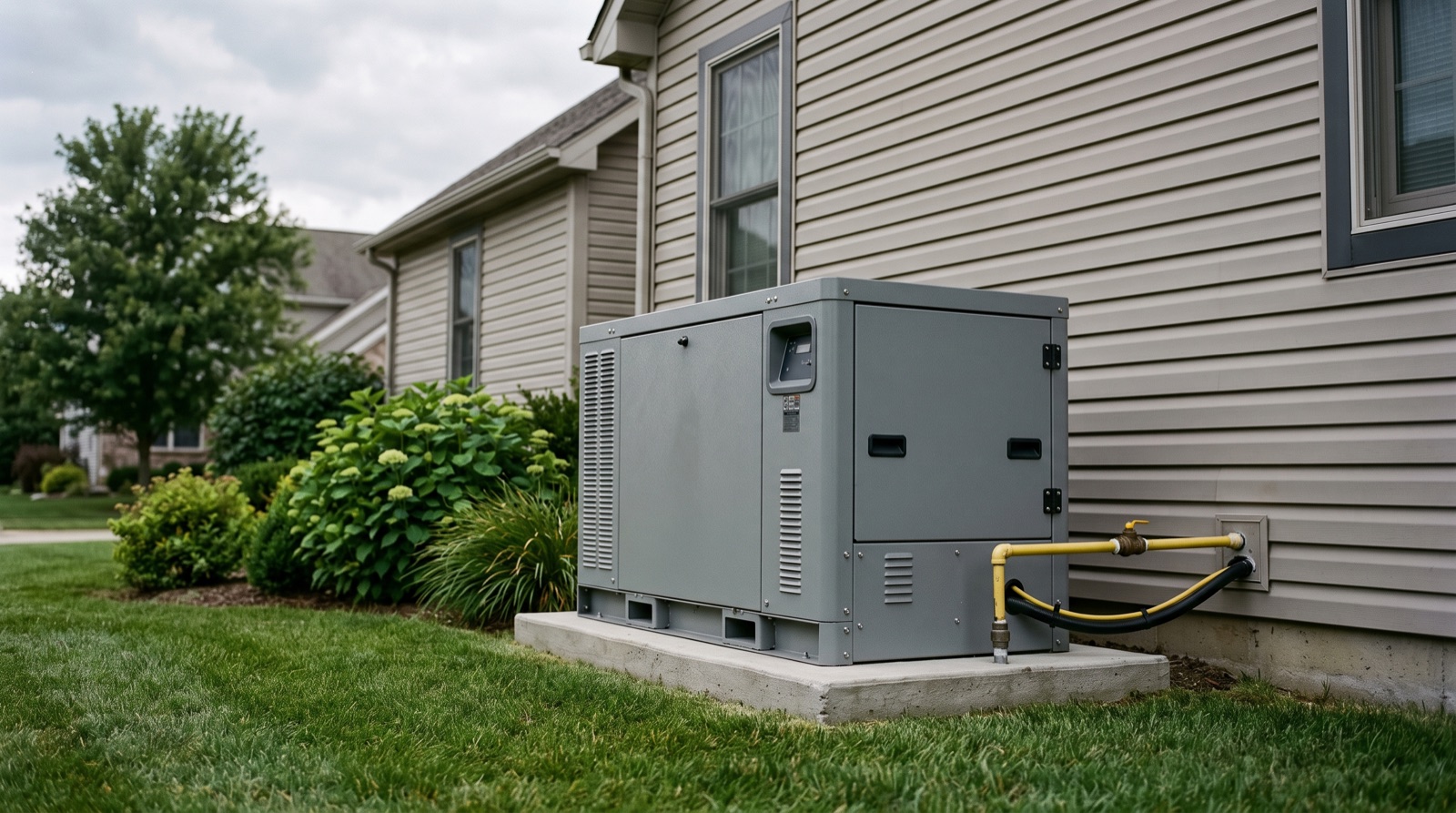
Whole-Home Generator Installation
A permanently installed standby generator with an automatic transfer switch restores power within seconds of an outage — no cords, no fuel cans, no waking up to a flooded basement or a thawed freezer.
What this job typically includes
- Sizing based on the loads you actually want backed up
- Concrete or composite pad and generator set placement
- Automatic transfer switch — whole-home or essential-circuits
- Coordination with a licensed plumber for the natural gas or propane line
- Battery, load-bank test and commissioning under real load
- Permit, inspection and a walkthrough of the exercise schedule
From your request to a finished job.
-
01
Tell us what is going on
Call, or spend two minutes on the quote form. We ask what the problem is, what kind of property, and where you are — enough to pass it to the right contractors and no more.
-
02
We pass it to local electricians
Your request goes to independent electrical contractors who work in your area and do that type of work. A panel upgrade and a PLC fault are not the same trade, so the kind of job decides who sees it.
-
03
Contractors get in touch
Contractors who want the job contact you directly to talk it through and give you a price. Compare them, ask questions, and choose who you want — or nobody.
-
04
You decide and hire
Your agreement for the work is with the contractor you choose, not with us. Before you agree, get the quote in writing, check their licence and insurance with your state, and ask whether a permit is needed.
Generators — what people ask.
How big a generator do I actually need?
It depends entirely on what you want running. Essential circuits — furnace, fridge, well pump, some lighting and outlets — usually land in the 10–14kW range. Backing up central air and an electric range pushes toward 22–26kW. Sizing should come from a load list, not from square footage.
Does it need fuel delivered?
Not if it runs on natural gas from the utility — that is the main advantage. Propane units need a tank, and that tank determines your runtime.
How often does it need service?
An annual service, plus the weekly self-exercise cycle the unit runs on its own. Skipping annual service is the most common reason a standby generator fails on the one night it is needed.
Get a quote for generators.
Two minutes and no obligation.
Rather write to us? support@bestusaelectricians.com