PPE is chosen from data or it is chosen from hope.
An arc flash label tells a worker the incident energy at that equipment and the protection required. Without a current study, the label is a guess with a number printed on it.
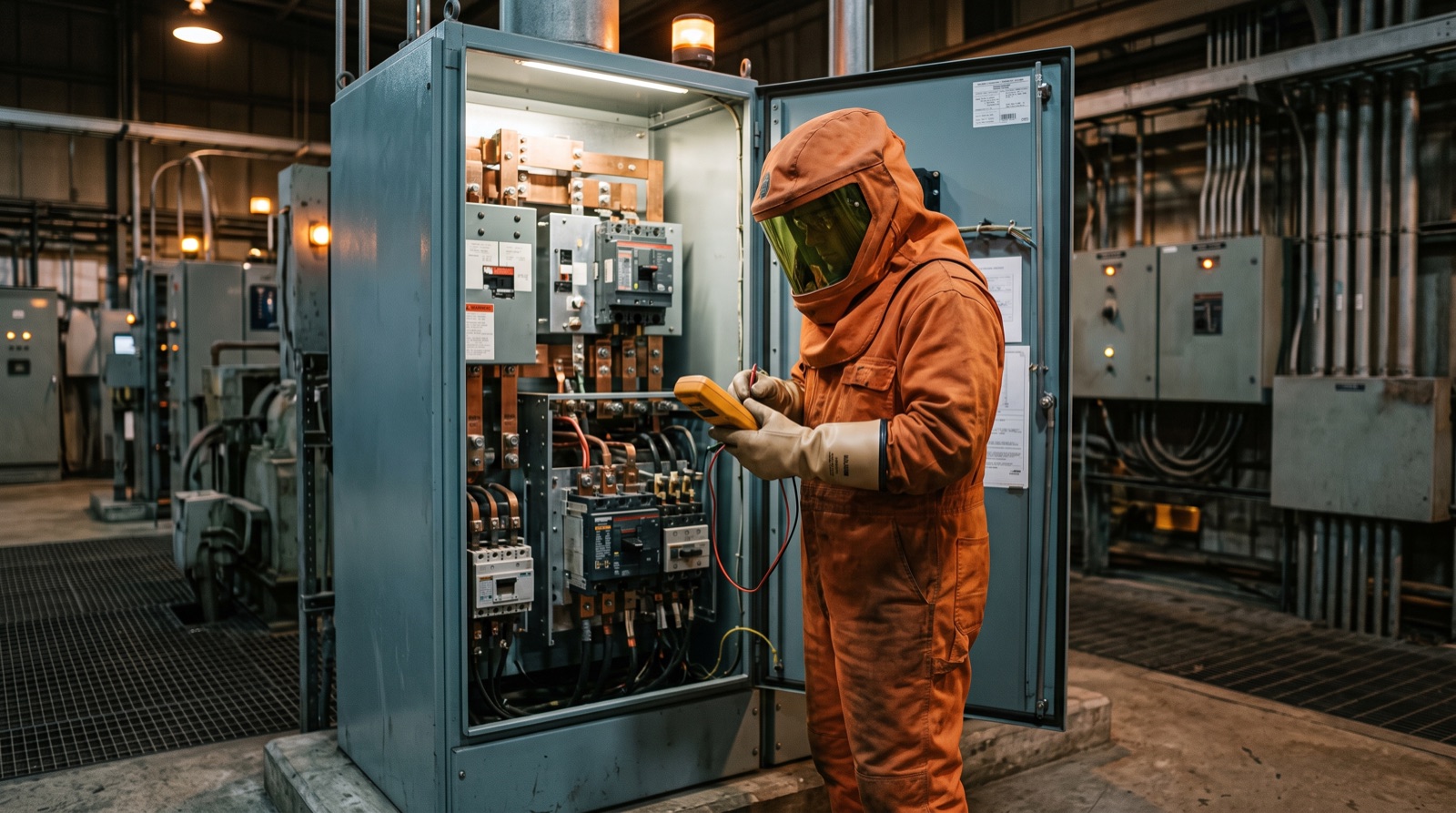
Arc Flash Studies & Electrical Safety Compliance
A short-circuit and coordination study feeding an incident energy analysis, current labels on every piece of equipment, and the written safety programme those labels are supposed to belong to.
What this job typically includes
- Field data collection and system modelling from the service down
- Short-circuit and protective device coordination study
- Incident energy analysis and arc flash boundary calculation
- Printed, applied equipment labels meeting current standard requirements
- Written electrical safety programme and energised work permit support
- Recommendations to reduce incident energy where it is excessive
From your request to a finished job.
-
01
Tell us what is going on
Call, or spend two minutes on the quote form. We ask what the problem is, what kind of property, and where you are — enough to pass it to the right contractors and no more.
-
02
We pass it to local electricians
Your request goes to independent electrical contractors who work in your area and do that type of work. A panel upgrade and a PLC fault are not the same trade, so the kind of job decides who sees it.
-
03
Contractors get in touch
Contractors who want the job contact you directly to talk it through and give you a price. Compare them, ask questions, and choose who you want — or nobody.
-
04
You decide and hire
Your agreement for the work is with the contractor you choose, not with us. Before you agree, get the quote in writing, check their licence and insurance with your state, and ask whether a permit is needed.
Arc Flash Studies — what people ask.
How often does an arc flash study need updating?
The commonly cited interval is a review at least every five years, and immediately after any change to the distribution system that affects available fault current or protective device settings. A service upgrade invalidates the previous study.
Is an arc flash study legally required?
The mechanism is indirect but real: OSHA requires employers to protect workers from electrical hazards and to select PPE based on assessed hazards, and NFPA 70E is the consensus standard describing how that assessment is done. Confirm your specific obligations with your safety counsel rather than a contractor.
What if the incident energy comes back very high?
That is a useful result, not a failure. High incident energy usually points at protective device settings that can be adjusted, or at maintenance switching, arc-reducing devices or upstream changes that lower it. The study is what makes those options visible.
Get a quote for arc flash studies.
Two minutes and no obligation.
Rather write to us? support@bestusaelectricians.com