Interconnected means every alarm sounds, not just one.
A standalone alarm in the basement does not wake anyone upstairs. Interconnection is the feature that makes the system work at 3am.
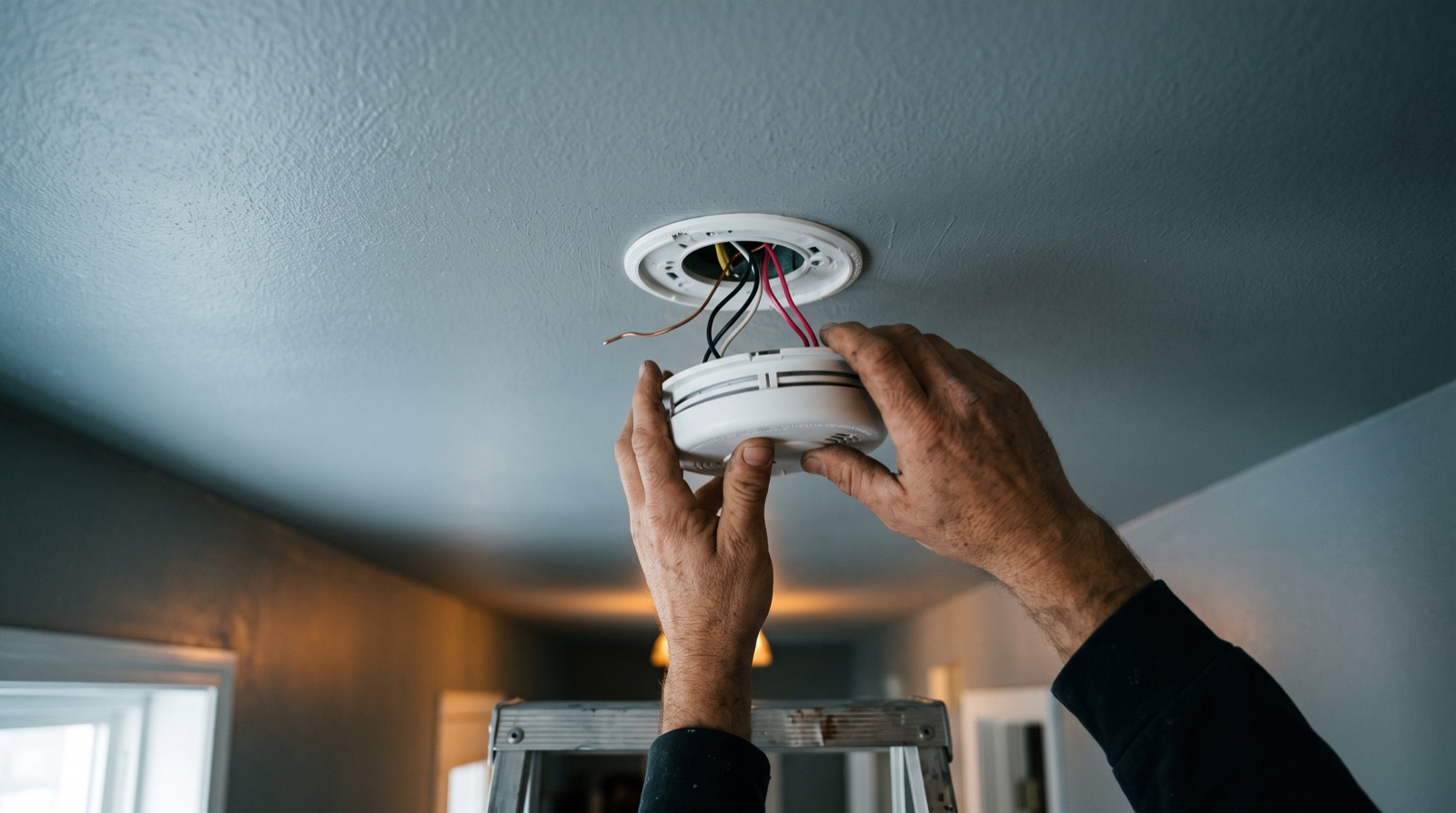
Smoke & Carbon Monoxide Detector Installation
Hardwired, interconnected smoke and carbon monoxide alarms with battery backup — placed to code, so that one alarm sounding sounds them all.
What this job typically includes
- Hardwired 120V alarms with battery backup
- Interconnection so any triggered alarm sounds all of them
- Combination smoke and carbon monoxide units where appropriate
- Code-compliant placement — each bedroom, outside sleeping areas, each level
- Replacement of units past their 10-year service life
- Wireless interconnection where running new cable is impractical
From your request to a finished job.
-
01
Tell us what is going on
Call, or spend two minutes on the quote form. We ask what the problem is, what kind of property, and where you are — enough to pass it to the right contractors and no more.
-
02
We pass it to local electricians
Your request goes to independent electrical contractors who work in your area and do that type of work. A panel upgrade and a PLC fault are not the same trade, so the kind of job decides who sees it.
-
03
Contractors get in touch
Contractors who want the job contact you directly to talk it through and give you a price. Compare them, ask questions, and choose who you want — or nobody.
-
04
You decide and hire
Your agreement for the work is with the contractor you choose, not with us. Before you agree, get the quote in writing, check their licence and insurance with your state, and ask whether a permit is needed.
Smoke & CO Alarms — what people ask.
How long do smoke alarms last?
The sensor degrades — the widely stated service life is ten years from the manufacture date printed on the back, regardless of whether it has ever sounded. CO sensors are typically shorter, often five to seven years.
Where are alarms required?
The common requirement is one inside each sleeping room, one outside each separate sleeping area, and one on every level including basements. CO alarm placement is usually tied to fuel-burning appliances and attached garages. Local amendments vary, so confirm against your jurisdiction.
Why does my alarm chirp at night?
Usually a low battery, and it happens at night because the temperature drop reduces battery voltage enough to cross the threshold. If a new battery does not stop it, the unit is likely at end of life.
Get a quote for smoke & co alarms.
Two minutes and no obligation.
Rather write to us? support@bestusaelectricians.com