Replacing parts is not diagnosis.
Intermittent electrical faults are the ones that get misdiagnosed most often, because the symptom is not where the fault is. Isolation beats guessing every time.
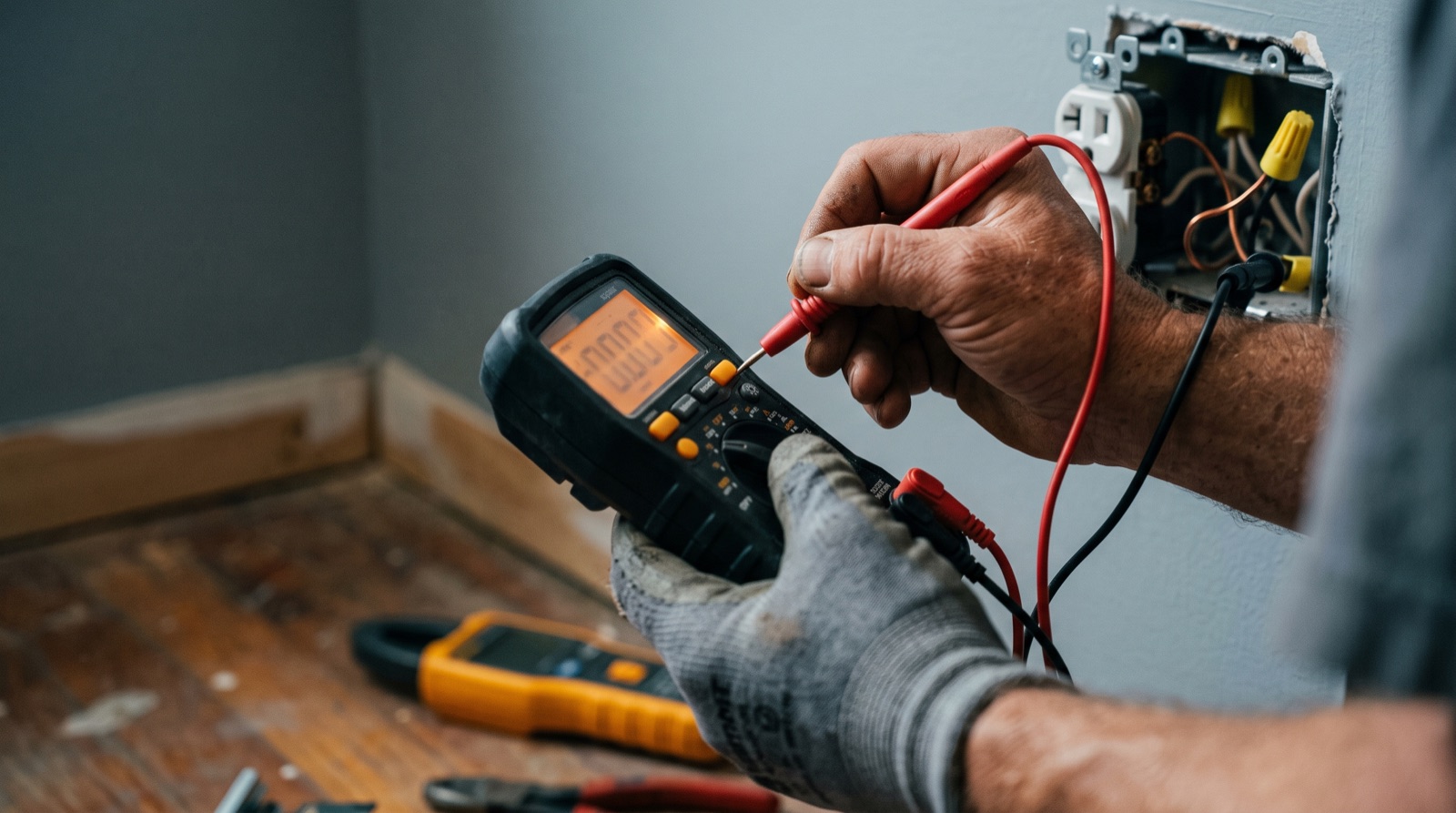
Electrical Troubleshooting & Diagnostics
Systematic diagnosis of intermittent faults, tripping breakers, flickering lights, dead circuits and phantom problems — isolating the real cause before anything is replaced.
What this job typically includes
- Circuit tracing and mapping of an undocumented panel
- Breaker trip analysis — overload, short, ground fault or arc fault
- Intermittent and load-dependent fault isolation
- Voltage drop, loose neutral and open neutral diagnosis
- Infrared and clamp-meter measurement under real load
- Written findings with the fault located and options priced
From your request to a finished job.
-
01
Tell us what is going on
Call, or spend two minutes on the quote form. We ask what the problem is, what kind of property, and where you are — enough to pass it to the right contractors and no more.
-
02
We pass it to local electricians
Your request goes to independent electrical contractors who work in your area and do that type of work. A panel upgrade and a PLC fault are not the same trade, so the kind of job decides who sees it.
-
03
Contractors get in touch
Contractors who want the job contact you directly to talk it through and give you a price. Compare them, ask questions, and choose who you want — or nobody.
-
04
You decide and hire
Your agreement for the work is with the contractor you choose, not with us. Before you agree, get the quote in writing, check their licence and insurance with your state, and ask whether a permit is needed.
Troubleshooting — what people ask.
Why does my breaker keep tripping?
There are four distinct causes and they need different fixes: sustained overload, a short circuit, a ground fault, or an arc fault detected by an AFCI. Repeatedly resetting without identifying which one is happening removes the protection and leaves the cause running.
What causes lights to flicker throughout the house?
House-wide flicker frequently points at a loose or failing neutral at the service or in the panel — which is a serious condition, because it can put unbalanced voltage on equipment. It warrants prompt diagnosis rather than watching it.
Is diagnosis charged separately?
Most contractors charge a diagnostic fee covering the time to locate the fault, and many credit it against the repair. Ask up front — a firm that will not quote diagnosis separately is often the one that intends to replace parts until something works.
Get a quote for troubleshooting.
Two minutes and no obligation.
Rather write to us? support@bestusaelectricians.com